Most Valuable Ingredient: Lentils
They’re not glamorous, but lentils are delicious, nutritious, fast-cooking, and inexpensive. Here's what you need to know about them.
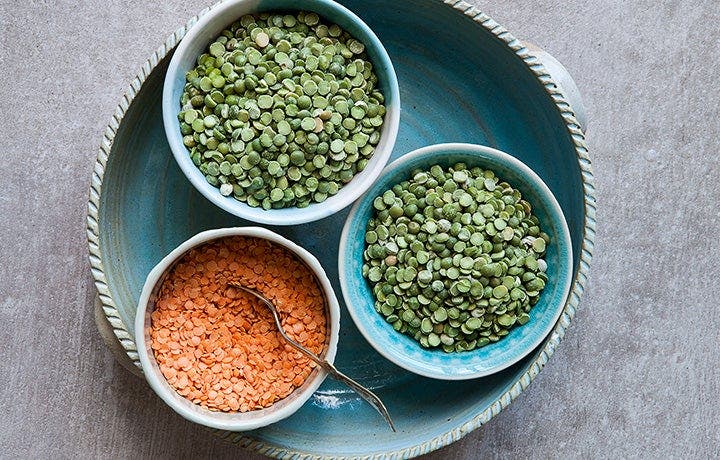
Lentils are small, but they pack a huge nutritional punch: They’re among the best plant sources of iron; a very good source of filling, cholesterol-lowering fiber; and a good source of protein. They also offer good to excellent amounts of two B-vitamins and six key minerals.
Types of lentils
Lentils come in a rainbow of colors:
Brown (sometimes labeled green — they’re khaki colored, really, they're the easiest to find)
French green (also known as Lentils du Puy, they’re the most elegant — and the most expensive)
Red (more of a salmon shade, they turn golden when cooked)
Black (sometimes called Beluga, since they resemble caviar)
When buying lentils...
Prices range from under a dollar up to $10 a pound, with brown being the least expensive and French green costing the most.
One pound dried yields from five to seven cups of cooked lentils, so even the pricier varieties are still a bargain.
Make sure they’re a uniform color, firm, smooth, and dry. If you’re buying in bulk — often the cheapest option — make sure the lids are covered and that the store has a bustling turnover. Lentils don’t go bad, but older ones take longer to cook. For this reason, don’t mix newly purchased lentils with those you already have — their cooking times may be different.
Store dried lentils in a cool, dry place. Like age, exposure to heat and humidity makes them harder to cook. Keep cooked lentils in the refrigerator for up to five days.