There is no ‘easy way out’ when it comes to weight loss
For decades, weight loss has been treated as a test of willpower — effort. GLP-1s are exposing how flawed that framing was all along.
)
When I decided to start a GLP-1 three years ago, I thought I was simply doing what I had done since I was twelve years old: trying the new weight-loss fad. I’d already tried every diet, pill, and plan. When it came to food, though, I just always felt like I was wired differently from everybody else — unable to control myself or utilize any sort of willpower.
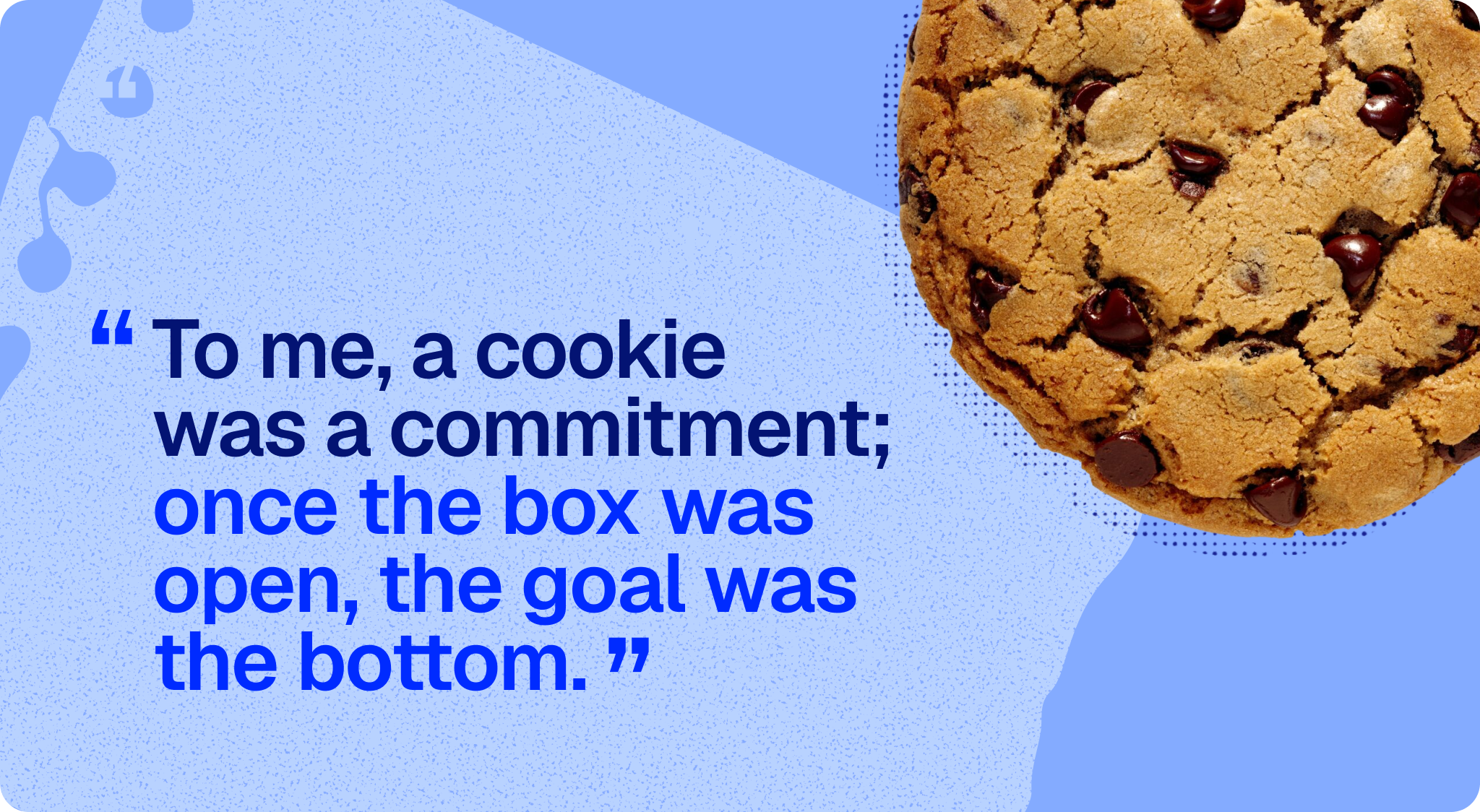
I first noticed this around my mother. She would reach into a box of Girl Scout cookies, pull out a single Thin Mint, take a bite, and then throw the rest in the trash — to my horror. To me, a cookie was a commitment; once the box was open, the goal was the bottom. But she didn’t even need to finish one.
My friends growing up all seemed to possess a similar level of self-control. I remember how one in particular would order the same food I did, but halfway through the meal would simply stop and push the plate to the center of the table. It was as if some invisible switch had flipped. I, on the other hand, finished everything — always. If there was food to be eaten, I ate it. I didn’t need to be hungry; I couldn’t even say I knew what true hunger felt like. I just knew my brain wouldn’t stop talking about food. Where was my switch? I wondered. I told myself I was just a glutton.

The day I took a GLP-1 for the first time, though, I felt something I’d never felt before. About halfway through a large plate of my favorite Greek salad at a restaurant near my office, one I had always finished and topped off with a side of lemon oregano fries, I put my fork down. I wasn’t physically stuffed or feeling sick. My brain simply said, “enough.” That constant mental chatter and food noise about what I ate, what I was going to eat, and the negotiations I’d have with myself about when I could eat again just…gone. My GLP-1 worked almost instantly.
“GLP-1 is the body’s built-in mechanism that signals ‘I am full and fueled,’” says Nneoma Oparaji, M.D., a board-certified internal medicine, obesity, and lifestyle physician. After you eat, your body releases this hormone (more formally known as glucagon-like peptide-1) to signal to the body you’ve had enough. GLP-1 medications like Wegovy (semaglutide), Zepbound (tirzepatide), and Foundayo (orforglipron) are designed to imitate it.
In many people with obesity, however, those signals don’t function the way they should. “Some people get strong ‘stop eating’ signals; others barely feel them,” says Hector Perez, M.D., a board-certified bariatric surgeon. GLP-1 medications work by taking that natural signal and making it stronger and longer-lasting. “It recalibrates a system that is out of balance,” says Oparaji.
Since starting a GLP-1, I’ve lost more than 60 pounds and maintained that loss for over a year. I’ve lost that amount before, but I was never able to keep it off for long. The minute I gave myself any leeway, the scale would start its inevitable climb. Just as I was finally beginning to make peace with my body — and understand that my weight struggles were never about self-control, but biology — I was confronted with the idea that some people viewed these medications as the easy way out.
There was the friend who casually mentioned that people on GLP-1s should be seeing psychologists instead of taking meds, to figure out why they overeat in the first place. Another time, I overheard people in a coffee shop talking about these drugs as some sort of quick fix. But mostly it played out online. An influencer I follow on social media posted a before-and-after photo and a short diatribe regarding her weight loss. Her caption felt like a preemptive strike: “Sharing this as proof that losing weight is possible without GLP-1s. It really just comes down to consistency and time. You put in the work and it happens. These days if someone shows weight loss, people automatically assume meds were involved. So I just wanted to put my own journey out there as a reminder: it's still possible to do this the old-fashioned way.” The comments were a chorus of praise for her, and criticism for GLP-1s.
Good for her, and for all her hard work — truly. But why pin the two against each other? Why is her choice not to use medication somehow superior? My whole life, I’d felt shamed — for living in a bigger body, and for not being able to change it. Was I now supposed to feel bad about how I finally lost weight?
Humans tend to place higher value on achievements that feel “earned” because effort is associated with personal merit, says Lori Bohn, PMHNP-BC, a board-certified psychiatric-mental health nurse practitioner. “This creates cognitive dissonance in observers: They feel that if someone didn’t suffer through the process, they somehow don’t deserve admiration.”
The cultural belief that weight loss should only happen through sheer willpower is fundamentally flawed, adds Oparaji — and based on stigma, not science. “If weight is framed as purely a matter of personal responsibility, then seeking medication can feel like cheating or admitting failure,” says Bohn. “But we don’t apply that same logic to other chronic conditions like hypertension or depression. No one tells a patient with high blood pressure that taking medication is a moral weakness. We recognize it as appropriate treatment for a biological condition.”
In fact, both Bohn and Oparaji argue that we need to view the use of GLP-1 medications through the same lens as psychiatric conditions. “Both scenarios involve addressing a biological or neurological imbalance,” Bohn says. “Neither should be morally judged as cheating or a lack of effort.”
If GLP-1s were a lazy way to lose weight, that wouldn’t make them any less valid. But the reality is…they aren’t. To lose weight and sustain that loss over the long run with medication, you need to change your eating pattern and activity level, especially if you want to sidestep side effects. And that requires effort. These medications don't replace healthy habits, says Oparaji. They “make discipline biologically possible.”
That invisible switch I’d been looking for? It turns out it was just waiting for the right signal. Finding it hasn't made me lazy — it has finally made me free. And that has nothing to do with who worked harder. It has everything to do with finally being able to hear my body.